

Reforesting the island of Flores to ensure a common future
On Flores, restoring the tropical dry forest goes hand in hand with passing on ancestral knowledge and restoring the place of medicinal plants in forest gardens.
Alongside local actors from our partner Cœur de Forêt, we are contributing to initiatives that combine reforestation, agricultural diversification and education. Ecological and agricultural assessments, a network of nurseries, nature outings and school projects, and the development of a galangal industry are all concrete levers for better protected environments and shared knowledge.


Micke Science explains !*
Our partner, Cœur de Forêt, has chosen to restore the island’s precious ecosystems and support indigenous communities in transitioning to more sustainable agroecological practices. To this end, it is carrying out a threefold initiative focused on reforestation, the development of ethical value chains, and raising awareness among local populations about the benefits of medicinal plants.
*Micke Science, science communication content creator.
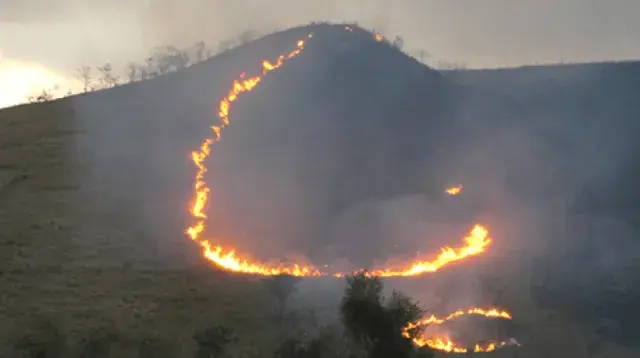
Flores: a tropical dry forest under threat
The tropical dry forest on the island of Flores (Indonesia) is a rare and vulnerable thing. Fires, slash-and-burn practices and land pressure are eating away at already fragile habitats. A recent forestry survey identified around 350 species, some of which have never been observed on the island (Morinda coreia, Lipoblepharis urticifolia and Marsdenia tinctoria), and others classified as critically endangered by the IUCN (Pterocarpus indicus). More worryingly, the study also revealed the absence or accelerated disappearance of endemic species such as oud wood (Gyrinops versteegii) and Indonesian cinnamon (Cinnamomum burmanni), both victims of overexploitation. An agrarian analysis shed light on the practices and needs of the families there: water management, soil improvement and crop diversification.
These findings form the compass of the programme led by Cœur de Forêt, which aims both
to restore the environment and to pass on useful everyday practices.
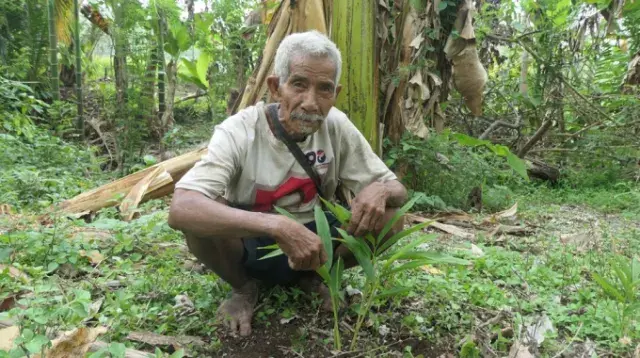
Reforesting, diversifying, passing on knowledge
Reforesting and protecting environments
Restoration is organised in coherent blocks: plots of at least one hectare, planted alongside at least ten complementary species with essential functions (shade, soil fixation, windbreaks). By 2026, 22,000 trees will have been planted and monitored. This vegetation anchors and enriches the soil, limits erosion, improves water infiltration and provides islands of coolness that encourage the return of biodiversity.
Agroforestry: putting useful plants back to the fields
Around their houses and in the fields, families enrich their plots by combining trees, food crops, and medicinal and aromatic plants. Three flagship species are found in these plots: galangal (known as laza), vanilla and patchouli. Easy to integrate, they help to cover the soil, nourish microbial life, diversify crops and reduce pressure on primary forest. Agroforestry thus becomes a tool not only for regeneration but also for passing on ancestral knowledge, with each plant restoring a little more of the local history to the landscape.
Agroforestry is the mutually beneficial coexistence of tree plantations and farming on communal land.
The tree species chosen are selected in particular for their ability to protect water resources or resist fire (Piliostigma malabaricum, Cassia fistula, Istonia scholaris, Lannea coromandelica and Gliricida sepium). These trees help to maintain the biodiversity needed to protect and develop crops. They also play an important role in the water cycle by helping to stabilise the soil and improve soil fertility.
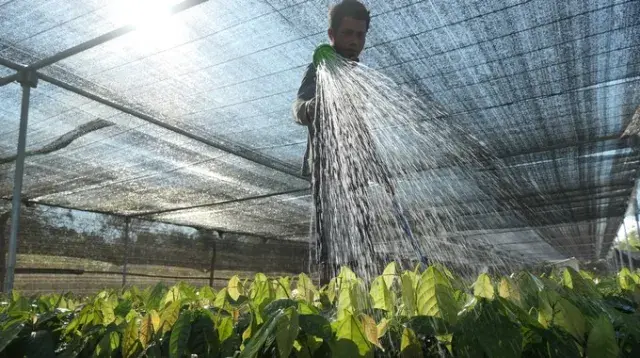
Producing and sharing: a network of nurseries
To ensure these changes take root, a network of four medicinal plant nurseries – one in each neighbourhood – produces and distributes plants chosen with the help of local residents. Sowing and transplanting sessions are collective learning experiences: 35 villagers take part each year before transplanting the seedlings to their own forest gardens. This network encourages the exchange of seeds, techniques and tips adapted to the Flores climate.
Raising awareness and passing on knowledge
Nature outings: elders and schools together
In the Wolomeze massif, a series of outings brings together schoolchildren from three classes and five elders. Participants learn to recognise useful plants, understand their ecological role and document their traditional uses. The pupils collect plants, compare them and ask questions, while the adults share stories and techniques. The forest becomes a school once again, under the open sky.
The elders of the island of Flores play a crucial role in passing on the knowledge of medicinal plants, in an area where 60% of the natural remedies used come from the forest. For example, the village of Maladhawi is home to a forest garden where various medicinal plants are grown. Among these is the Wakatere, a tree whose bark is used in postpartum care to stimulate and boost immunity, or Wild Pepper (Pipper retrofractum), used for postpartum decoctions.
Watch : the video testimony of former Laurencius Nende
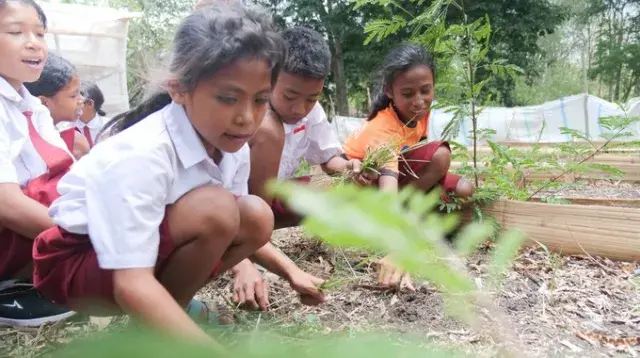
At school and in the garden
In schools partnering with the Puge Figo association (local branch of Cœur de Forêt), education is hands-on. One hundred and twenty students have already made compost, planted medicinal plants and fruit trees, and created two hundred herbariums to keep track of local species. The aim of the programme is to involve twelve classes – totalling two hundred and forty children – by 2026.
Watch : the video “When the future takes root at school!” – an inside account of the journey from classroom to garden.
The use of medicinal plants may present risks. Traditional uses do not constitute a therapeutic promise. Before any personal use, seek advice from a healthcare professional.
Towards responsible supply chains with galangal
Galangal (Alpinia galanga), known as laza in Flores, illustrates this resurgence of useful plants. To establish a responsible supply chain, agroecological approaches have been refined with families: the first small-scale processing operations are taking shape and commercial and ethical outlets are emerging, enabling diversification of income sources. The industry relies on the quality of the plants and on a collective organisation that promotes the expertise of the growers.
Targets for 2026
trees planted in agroforestry and around water sources, comprising at least ten species
nurseries growing medicinal plants established, employing 35 villagers per year
schoolchildren learning about local plants and their uses
family farms trained in agroecology techniques
Flores plants to (re)discover
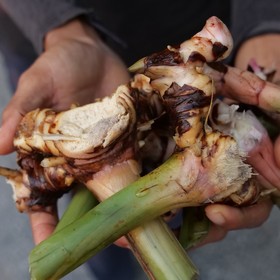
Galangal
(Alpinia galanga, “laza”)
An aromatic rhizome with a camphor-peppery scent, cultivated in gardens and secondary forests, traditionally associated with digestive comfort and widely used in cooking.
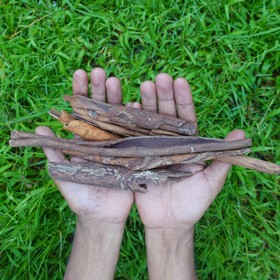
Indonesian cinnamon
(Cinnamomum burmannii)
A large high-altitude tree of the laurel family whose bark, in sticks or powder form, is used to flavour dishes and drinks, and used traditionally to relieve respiratory tract and joint pain.
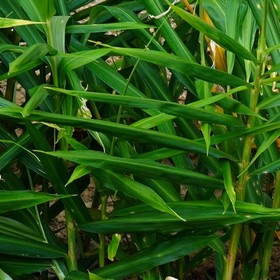
Ginger
(Zingiber officinale)
A rhizome with a spicy, lemony flavour, renowned for its digestive and culinary properties.
This information relates to traditional usage and does not constitute medical advice. Always seek the advice of a healthcare professional.
We have been working with the communities of Flores Island for more than 10 years to help them secure their livelihoods while strengthening their ancestral ties to their environment. Listening, support, and the promotion of local practices are key pillars of our approach, ensuring the long-term impact of our work.
Our partner
Since 2015, Cœur de Forêt has been advocating for environmental and social justice by reshaping the precious balance between forests and humans. In France, Indonesia, Bolivia and Madagascar, it works hand in hand with local communities, launches sustainable management solutions for agricultural and forest ecosystems and kick-starts educational and collaborative processes to give back the power to humans to act and protect their environment.
To go even further
Browse our “Medicinal plants” page to discover other iconic species, videos and all our projects related to the passing on of ancestral knowledge.