

Everything you need to know about galangal
Alpinia galanga
An aromatic rhizome from Southeast Asia, galangal belongs to the Zingiberaceae family and is distinguished by its camphor-peppery scent and traditional uses.
A perennial herbaceous plant widely cultivated in Asia today, galangal has been used for centuries in cooking, where it adds flavour to soups and curries, and in traditional medicine, where it is reputed to improve digestive comfort. Similar to ginger, it thrives in tropical gardens and undergrowth, where it also plays an ecological role in agroecosystems (microhabitat, soil).

Galangal fact file
- Scientific name: Alpinia galanga (L.) Willd.
- Family: Zingiberaceae
- Common names: Lengkuas (Indonesia), Laza (Flores)
- Origin: Southeast Asia (Java, Thailand, Indonesia, India)
- Habitat: community gardens, cultivated plots, secondary tropical undergrowth forests
- Part used: rhizome (spice; traditional preparations)
Galangal is a large perennial herbaceous plant of the Zingiberaceae family, closely related to ginger but with a distinct chemical and aromatic profile. Its intensely aromatic rhizome is highly prized in Southeast Asia, where it is used in soups, curries and traditional tonics.
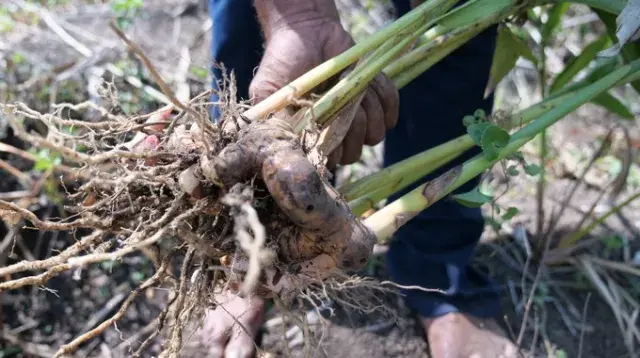
Botanical description
-
Growth habit: grows in clumps; aerial parts 1 to 3 m depending on conditions.
-
Leaves: alternate, ligulate, oblong/oval, acuminate.
-
Inflorescences: 20x30 cm terminal panicles.
-
Flowers: white to pale green (sometimes greenish with red veins).
-
Fruit: Brown/red capsule, 3-6 seeds.
-
Rhizome: branched, tuberous, very aromatic. The colour of the rhizome varies (white to pale yellow, sometimes reddish on the surface depending on the plant and the soil).
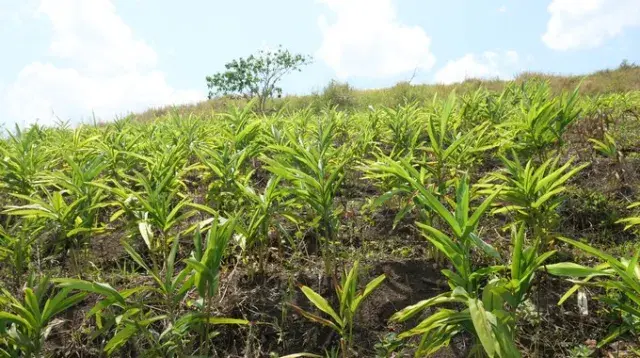
Ecology and habitat of galangal
In the tropical landscapes of Southeast Asia, galangal occupies the lower storey of secondary forests and agroecological plots.
The plant provides microhabitats for small organisms, contributes to soil moisture through its leaf canopy and helps to stabilise the soil by limiting erosion through its root system.
Medicinal and culinary uses of galangal
In cooking, the rhizome adds a spicy, camphorated and peppery note, often described as “somewhere between pepper and ginger”. It is ubiquitous in many Southeast Asian recipes (soups, curries).
In traditional medicine, galangal is commonly used for:
- Digestion : Traditionally used for digestive disorders (nausea, diarrhoea, stomach ache) and abdominal pain; in Chinese pharmacopoeia, the dried rhizome is described as pungent and “warm in nature”, which soothes the stomach, dispels cold and alleviates pain.
- Joints : In several Southeast Asian countries, galangal is used to relieve joint pain in herbal preparations and traditional tonics.
- Respiratory tract : Galangal essential oil is traditionally used to relieve certain respiratory disorders in children (colds, coughs, bronchitis).
- Skin & scalp : Traditionally believed to have skin and scalp cleansing properties (anti-dandruff action). Laboratory tests have demonstrated antimicrobial/antifungal activity, particularly against Malassezia furfur.
- Metabolism : In several regions, galangal is reputed to help reduce blood sugar and cholesterol levels.
- Well-being : In Thailand and Malaysia, galangal is used in herbal formulas and soothing tonics; its essential oil is also used in cosmetics and aromatherapy.
- Heart : In the Middle Ages, galangal appeared in the writings of Saint Hildegard of Bingen, who recommended it for the heart, as a tonic to support circulation and relieve ailments (pain, weakness, discomfort).
Discover the episode of our “Faux pas pousser” video series on the medicinal properties of galangal.
Galangal or ginger: what are the differences?
Although they belong to the same family, their chemical and sensory profiles differ:
- Galangal: rich in phenylpropanoids (including 1-acetoxychavicol acetate), camphor/peppery aroma; culinary stimulant and traditionally associated with digestion.
- Ginger: rich in gingerols, with a lemony-spicy note; traditionally recognised for its anti-emetic effects (nausea, motion sickness) and anti-inflammatory uses.
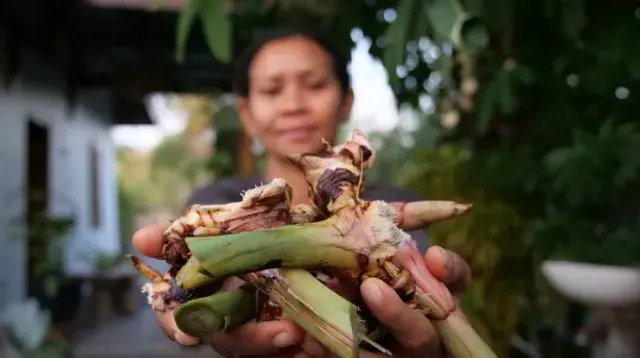
Where is galangal found?
Since the early Middle Ages, galangal has been traded along the merchant routes of the East; its vernacular name probably derives from the Arabic khanlanjan, itself derived from the Chinese liang-jiang (“sweet ginger”). Geographers from the 9th century already described it as a trade product in India and China; in the 13th century, Marco Polo reported its production in southern China and Java. Around the same time, Hildegard of Bingen extolled its virtues in her writings, bearing witness to its spread throughout Western Europe.
The plant is now widely cultivated in Asia, with Thailand, Indonesia and India being the main producing countries. In Flores (Indonesia), it is known as Laza and is grown in community gardens, cultivated plots and secondary forests.
Find out more about our work with medicinal plants in Indonesia on the island of Flores.
FAQs
Galangal’s taste is spicy, camphor/peppery; often described as “somewhere between pepper and ginger”.
Galangal is mainly known to help digestive comfort, but also a soothing/sanitising effect on the skin and scalp.
Galangal and ginger belong to the same family but they have different chemistry and flavours (phenylpropanoids vs. gingerols). Ginger is best known for its anti-motion sickness and anti-inflammatory properties.
Galangal is native to Southeast Asia, now cultivated in Thailand, Indonesia and India; found in gardens and secondary forests.
Galangal is also known as Greater Galangal and, depending on the region, as: Lengkuas (Indonesia), Laza (Flores), as well as Khanlanjan (Arabic, derived from Chinese “Liang-jiang”) and Kulanjan/Kulinjan (derived from Sanskrit “Kulanja”).
The use of medicinal plants may present risks. Traditional uses do not constitute a therapeutic promise. Before any personal use, seek advice from a healthcare professional.
To go even further
Browse our “Medicinal plants” page: illustrated fact sheets, videos and projects, from the Amazon to the Sahel.