

Everything you need to know about the Madagascar periwinkle
Catharanthus roseus
An emblematic herbaceous plant that grows on Madagascar, the Madagascar periwinkle is as attractive for its pretty pink flowers as for its virtues in traditional medicine.
A plant of the Apocynaceae family, Catharanthus roseus (syn. Vinca rosea) has since spread beyond its native island to many tropical countries, where it is prized for its ornamental and medicinal qualities.
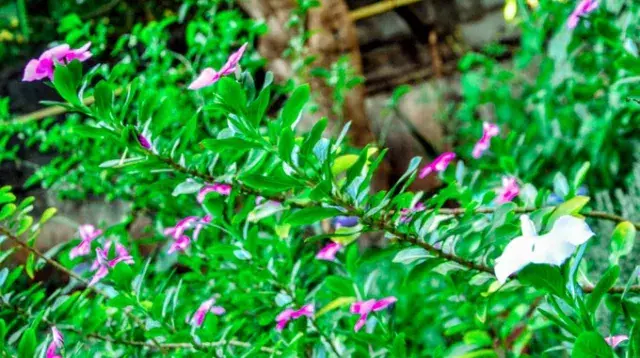
Fact file
- Scientific name: Catharanthus roseus (syn. Vinca rosea L.)
- Family: Apocynaceae
- Common names: rajoma (antakarana), arivotambelona, felatananamba, vonenina (Malagasy), tropical periwinkle
- Origin: Madagascar; now cultivated/naturalised in many intertropical countries
- Parts used: leaves and flowering tops, depending on the application
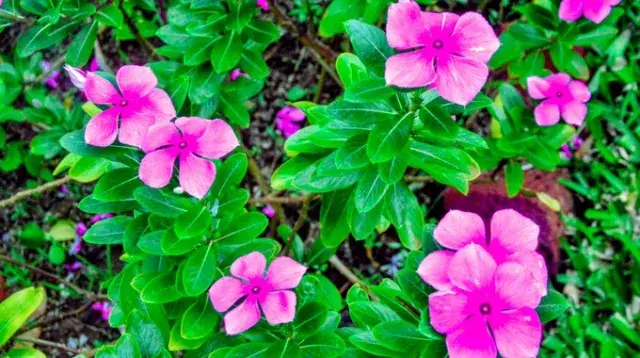
An upright tropical herbaceous plant, Madagascar periwinkle is distinguished by its star-shaped flowers (five-lobed corolla, usually pinkish-purple with a darker throat, sometimes white). The leaves are entire, opposite, oblong to elliptical, petiolate, 3-8 cm long and 2-5 cm wide. The leaf blade has pinnate veins and may be pubescent in some varieties. The upper surface is bright green and glossy.
The flowers, which are solitary or grouped in twos or threes, are regular in shape. The gamosepalous calyx is shorter than the corolla tube and has no bulge. The corolla is white, bright pink or mauve pink, with a darker or lighter throat.
The fruit consists of two follicles and the black seeds are rough.
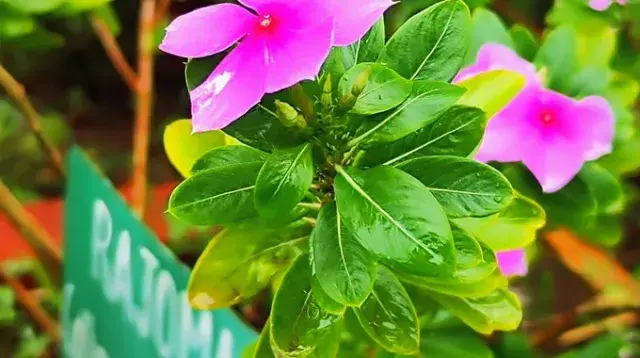
Botanical description
- Size & fit: approx. 60-75 cm; upright stem, taproot.
- Leaves: opposite, simple, entire, glossy green.
- Flowers: 5-lobed corolla (pink, white, red); often with a darker throat.
- Fruits & seeds: elongated follicles containing numerous seeds.
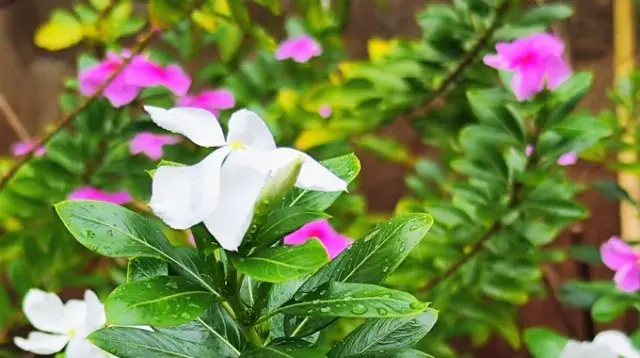
Ecology & habitat
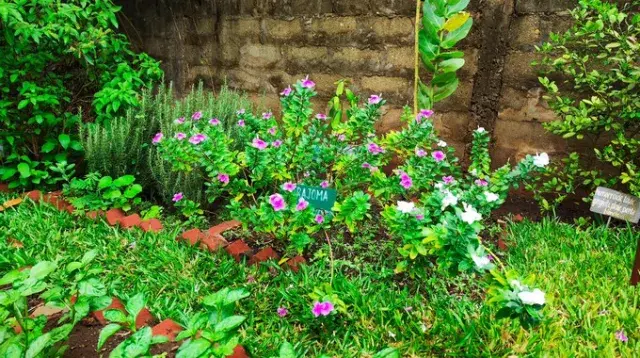
A common tropical species: cultivated for ornamental purposes in gardens, it can grow spontaneously in degraded areas and on agricultural plots. It thrives in warm conditions and well-drained soils; outside the tropics, it is mainly grown as a seasonal crop.
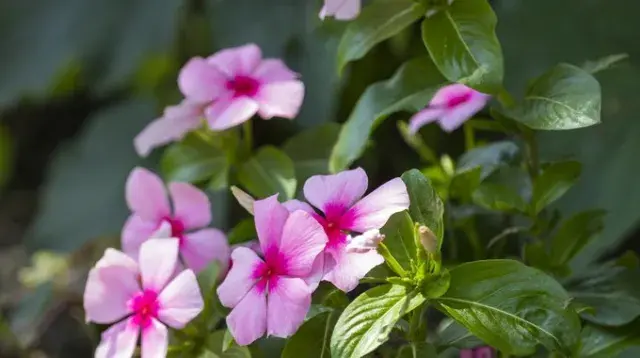
Traditional medicinal uses of Madagascar periwinkle
- Reported properties: astringent, antibacterial, anti-inflammatory
- Popular use in Madagascar: decoction of leaves and flowering tops to treat high blood pressure, diabetes, liver disorders, dermatitis and oral candidiasis.
- Eyes: commonly used as a decoction to bathe eyes with conjunctivitis and eye infections
*Information based on traditional use; does not replace medical advice.
Periwinkle and cancer research
In the second half of the 20th century, alkaloids (notably vinblastine and vincristine) were isolated from dried periwinkle leaves and found to have an anti-cancer effect on a large number of tumours (particularly breast and bronchial cancers). Synthetic derivatives were subsequently developed.
Where is it found today?
Endemic to Madagascar, the Madagascar periwinkle is cultivated and sometimes naturalised in many tropical countries (notably for the production of leaves for alkaloid extraction or for ornamental purposes). It is often found in gardens and open spaces in intertropical climates.
Find out more about our project in Madagascar to develop traditional medicine and cultivate medicinal plants.
FAQs
Yes, the Madagascar periwinkle is a perennial in tropical climates; in cooler climates, it is often grown as an annual.
It is a tropical plant that likes heat and light; it is not frost hardy. Outside the tropics, it is grown in pots or as a seasonal plant in the garden.
Yes: Vinca rosea is a botanical synonym for Catharanthus roseus. And the Madagascar periwinkle is also called the tropical periwinkle.
The flowers of Madagascar periwinkle are mainly pink with a dark throat, but white or red flowers are common in horticulture.
Madagascar periwinkle is toxic when ingested, even in small quantities. In any case, do not use the plant without medical advice, particularly for pregnant or breast-feeding women, children or in cases of illness.
Madagascar periwinkle has served as a botanical source of alkaloids which, after isolation and pharmaceutical development, are used in oncology. This does not imply direct use of the plant, only the pharmaceutical derivative extracted from it.
The use of medicinal plants may present risks. Traditional uses do not constitute a therapeutic promise. Before any personal use, seek advice from a healthcare professional.
To go even further
Browse our “Medicinal plants” page: illustrated fact sheets, videos and projects, from the Amazon to the Sahel.