

Embracing agroforestery to save the ecuadorian rainforest
Is it possible to curb deforestation in the Amazon rainforest while improving living conditions for indigenous populations? This is the mission that inspired the launch of the Ishpingo Foundation, the Klorane Botanical Foundation’s partner in Ecuador with a focus on agroforestry, training and awareness-raising among Kichwa farmers.
Micke Science explains !*
*Micke Science, science communication content creator.
Forest vs farming
With over 50% of its territory covered by the Amazon rainforest, Ecuador has a front-row seat to the problems associated with deforestation. The country is a biodiversity hotspot, but is losing between 1.5 and 2% of its forest cover each year due to the combined effect of urbanisation, oil exploitation, and the expansion of land used for farming. But for those living in Amazonian regions, deforestation is a necessary evil. In these remote areas, agriculture is usually the only source of income and farms need to take over more and more of the forest to support the population as it develops.
Agroforestry, meanwhile, presents an alternative means of subsistence – one that does not involve pitting farmland and forest cover against each other. For several years now, the Ishpingo Foundation has been working hand-in-hand with farmers from Kichwa communities to develop an agricultural approach capable of simultaneously preserving ecosystems and ways of life. These descendants of the Quechuas in the Andes make up a community of nearly 100,000 people living in the Ecuadorian Amazon region, and who rely on what is essentially an agricultural economy.
Restoration and diversification
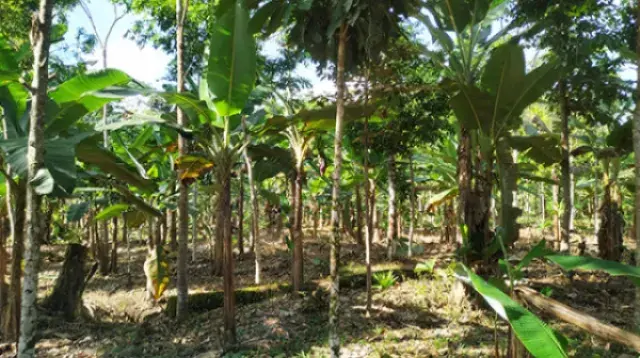
Agroforestry involves combining agricultural production and tree plantations on the same plot of land. It is based on the principle of co-benefits, and is an ethical method of managing space and resources. Trees promote the conservation of the biodiversity needed to protect and develop crops. They also play an important role in maintaining a healthy water cycle, and help to stabilise the soil and improve its fertility. A win-win situation in return for giving up just a little land!
Amazonian fruit and medicinal plants to the rescue
This is at the core of the work this organisation is doing, backed by the Klorane Botanical Foundation since 2021 as part of a six-year partnership agreement. Ishpingo supports Kichwa farmers to adopt new practices by delivering targeted training and awareness-raising activities, as well as setting up community nurseries. To ensure the reforestation taking place is sustainable and of a high quality, species are carefully selected: big-leaf mahogany (Swietenia macrophylla), chuncho (Cedrelinga cateniformis), guayacán (Tabebuia sp.), to name a few: the farmers choose from around forty endangered native species that are perfectly adapted to conditions in the Amazon rainforest. A number of fruit-bearing and medicinal varieties are also selected to enable the Kichwas to diversify their food and production options, in addition to the timber used for crafts and construction. A minimum of fifteen different varieties are planted per plot, to promote the diversity and resilience of the restored ecosystem
In Kichwa families, medicinal plants remain the first line of defence against minor ailments; their presence in the forest garden helps to perpetuate ancestral knowledge and reduce pressure on the primary forest. For example:
- The dragon tree (Croton lechleri), whose red latex is known as “dragon’s blood”, is traditionally used to cleanse the skin and mouth, and to treat minor digestive problems,
- Ginger (Zingiber officinale), the rhizome of which has a spicy, lemony flavour, is traditionally associated with digestive comfort and nausea relief.
An organised, community-based method
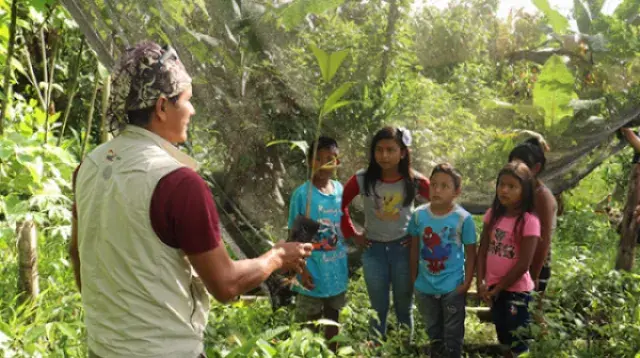
An initial consultation is held with participants to assess the capacity of their plots and determine the best roadmap to follow. Agroforestry can be adapted to different conditions and goals: plants can be spread out between crops or they can be used to create a boundary of trees, depending on the space available. A long-term plan is drawn up with each farmer to select temporary subsistence crops, which will then be replaced by ombrophilous species (those tolerant of wet conditions) once the forest cover has been re-established. Community nurseries are created to provide a sufficient quantity of quality plants and serve as a training resource.
Passing down expertise and raising awareness
Every year, nearly 25 families receive extensive support. Collectively, farmers are trained in nursery management and exploitation techniques. Individually, they receive training in agroforestry techniques to optimise the way they manage their own plot. These skills include maintenance, managing shade, rotating plants, preserving biodiversity and controlling pests, but also how to harvest and transport fruit, transform plants into medicines, or use timber.
The next generation is also involved in this community project, with activities incorporated into annual school curricula. Each year, one school receives training in the principles and challenges of sustainable development. During specially organised field trips, students learn to recognise and care for local species. A nursery and an arboretum are created in the school, and children are able to take fruit trees home to their families.
Teenagers are getting involved too since this educational work is now being extended to Shandia High School. Approved by the Ministry of Education, a subject called “traditional medicine” is now taught for three hours a week in the first, second and final years. Thanks to the work of Ishpingo, high school students:
- Carry out research (bibliography, interviews) on medicinal plants and draw up a guide to their identification, propagation and use,
- Take courses in botany, anatomy, pathology and hygiene, and run extraction/formulation workshops (ointments, balms, cosmetics),
- Have a laboratory room dedicated to medicinal plants, a nursery and a conservatory to house plants that are then distributed to students to grow at home,
- Students go on to promote their work at regional fairs to contribute to the school’s financial independence.
Medicinal plants at secondary school?
Micke Science takes us to Shandia to find out how students document,
cultivate and share knowledge about local medicinal plants.
Key figures:
Our work involves convincing farmers to opt for agroforestry rather than monoculture.” It is a multi-generational endeavour and engages the whole community. The first step is therefore cultural. Next, we ensure that knowledge and tools are passed down to ensure this reforestation process is sustainable in the long term.
Focus on some of Ecuador’s medicinal plants
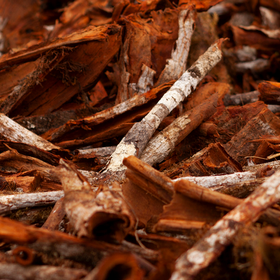
Cinchona
(Cinchona succirubra)
Tonic and bitter bark, used for centuries to combat fevers
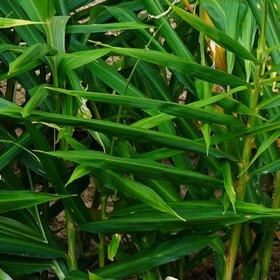
Ginger
(Zingiber officinale)
A rhizome with spicy, lemony notes, renowned for its digestive comfort and culinary properties.
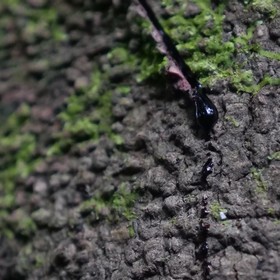
Dragon tree
(Cinchona succirubra)
A tree with red latex known as “dragon’s blood” that has healing and cleansing properties.
Our partner

The Ishpingo Foundation is a French and Ecuadorian non-governmental organisation and was founded in 2005. Its aim is to improve the social, economic and environmental conditions of native populations of the Amazon rainforest, and to reforest and preserve biodiversity by developing agroforestry projects.
To go even further
Want to explore the medicinal plants world? Browse our “ “Medicinal plants” page: illustrated fact sheets, videos and projects, from the Amazon to the Sahel.
The use of medicinal plants may present risks. Traditional uses do not constitute a therapeutic promise. Before any personal use, seek advice from a healthcare professional.
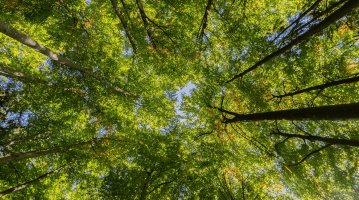
What is agroforestry?
Trees blooming and animals grazing between rows of crops? A happy world where pulling together is the name of the game! (Re)discover the principles of this biodiversity-boosting concept.