

Everything you need to know about the desert date palm
Balanites aegyptiaca
A totem tree of arid regions, the desert date palm provides food, everyday materials and serves an ecological function, while being remarkably resistant to drought.
A species of the Zygophyllaceae family, Balanites aegyptiaca, also known as the “soap tree” grows from the Sahel to Arabia and as far as India. Highly exploited locally for its fruit, oil-rich kernels and wood, it is at the heart of reforestation initiatives such as the Great Green Wall, where it has been selected for its resilience.
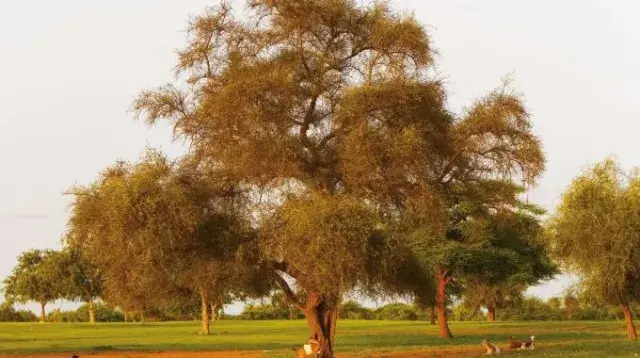
Fact file
- Scientific name: Balanites aegyptiaca
- The family: Zygophyllaceae
- Common names: over 400: wild date palm or Egyptian myrobolan (French), savonnier (Chad), séguéné (Mandé), soapberry tree (English), heglig (Arabic), sump (Wolof), golétéki (Pulaar), modèl (Sereer)
- Origin & distribution: Dry tropical Africa (Sahel, East Africa), Arabian Peninsula, India, Pakistan.
- Habitat: sandy or stony soils, dunes, valleys; dry, sunny environments.
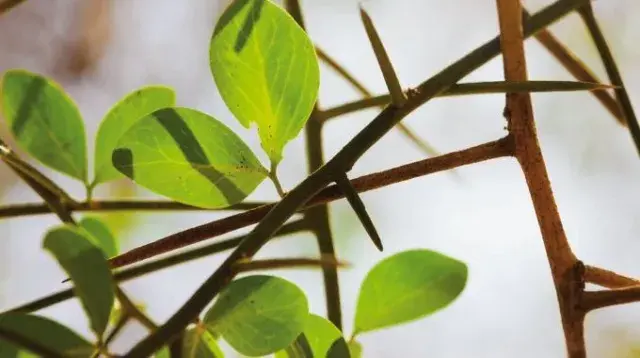
A small to medium-sized thorny tree (it can reach up to 10m) found in arid zones, the desert date tree has bifoliate leaves and small greenish-yellow flowers. Its fruit are oval drupes, green at first then yellow when ripe, with a bittersweet pulp surrounding a very hard stone containing an oil-rich kernel. Its numerous, branches project in multiple directions, giving it an irregular shape and dishevelled appearance. Its very thick bark protects it from bush fires. Its branches feature many long thorns (up to 8 cm long), which protect it from most predators.
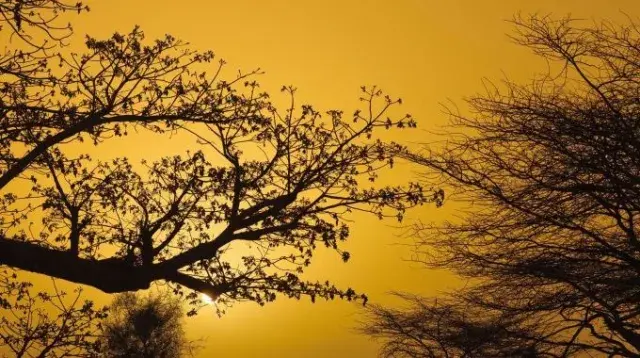
Botanical description
- Growth habit: 8-10 m, irregular crown, thorny branches; bark smooth then cracked.
- Leaves: opposite, two leaflets.
- Flowers: 5 greenish-yellow petals with 10 to 15 stamens.
- Fruit: 1-5 cm drupes, with a brittle, leathery skin; the pulp is sweet-bitter and mucilaginous, the pit is very hard, woody, and fibrous, containing an oil-bearing kernel.
- Flowering occurs mainly in the spring; fruiting takes place in the summer and fall. In the Sahel, flowering can be irregular and occurs mainly from October to June. The first fruits appear when the tree is between 5 and 8 years old.
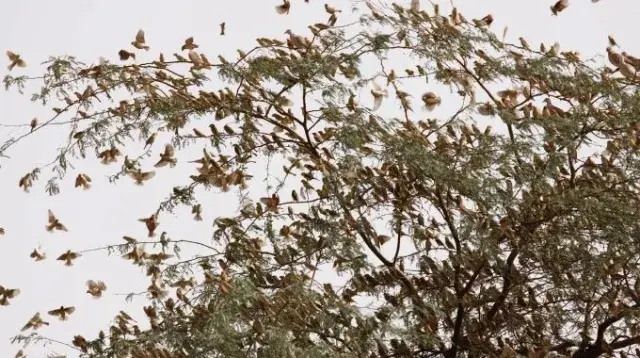
Ecology and habitat of the desert date palm
A true xerophyte (a plant capable of withstanding severe drought), Balanites aegyptiaca owes its incredible resistance to a dual root system: shallow roots, spread over a radius of 20 m, which capture water very effectively immediately after rainfall, and deep roots which draw on soil reserves up to 7 m below the surface. This makes it resistant to prolonged drought (up to two years) and helps to enrich poor-quality soils and combat erosion. Used as fodder (leaves/flowers) and as a resource in the dry season, it is recommended for Sahelian reforestation programmes. It can survive for more than 100 years despite a particularly hostile environment.
Traditional medicinal and food uses
A multi-purpose tree, the desert date tree contributes to the diet, income diversification and daily care of local populations.
Food. The fruit pulp is eaten fresh or dried, in porridge, bread or cakes, and provides a valuable source of energy during the dry season. The pulp is also eaten as is, as a treat. The young leaves and sometimes the flowers are cooked and eaten as vegetables. The stone contains a kernel from which an edible oil is extracted, which is widely used and has properties similar to peanut oil.
Everyday materials and techniques. The branches, stripped of their thorns, are used as toothbrushes. The dense, durable wood is used to make kitchen utensils, posts, fences and even camel saddle trees. The oil and roots are used as a base for traditional soap making, hence the nickname “soap tree” (not to be confused with the ornamental soap plant Koelreuteria paniculata). In Western Sahara, women extract a yellow pigment from the fruit to dye their lower eyelids.
Traditional medicinal uses (human & veterinary health). According to local pharmacopoeias, various parts (flesh, leaves, bark, and sometimes roots) are traditionally used to aid digestion (stomach ulcers, constipation, stomachaches), skin cleansing (burns and superficial wounds), and minor respiratory complaints. It is also used to treat smallpox, yellow fever, asthma, syphilis, leprosy, diabetes, high cholesterol, hemorrhoids, rheumatism, and headaches. In veterinary medicine, it is used as a dewormer, for colic, for eye care in livestock, and as a feed supplement during the dry season.
Resource during dry periods. Thanks to its resilience, the tree provides fruit, leaves and oil when resources are scarce, contributing to food security and local crafts (oil pressing, soaps).
Where can it be found today?
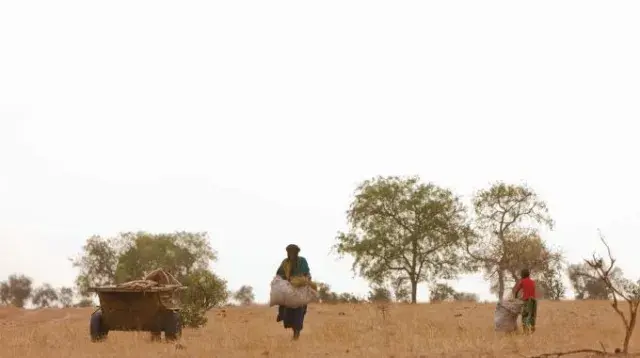
Balanites aegyptiaca is common from Senegal to the Horn of Africa, and is also found on the Arabian Peninsula and as far afield as India. It grows on sand, dunes and valleys in dry regions. It is one of the indigenous species selected for the Great Green Wall, from Senegal to Djibouti, with initiatives coordinated by scientific and institutional actors (nurseries, plantations, fire control, growth monitoring, raising public awareness).
Download our special file on the desert date palm
(NB. French document)
Discover our initiatives for the Great Green Wall project in the Sahel in partnership with the CNRS
FAQs
Yes: the pulp of the desert date palm is consumed locally (fresh, dried, in porridge/bread). It surrounds a stone containing an oil-rich kernel.
The kernels and other parts of Balanites aegyptiaca contain foaming substances used for toiletries and handmade soap, hence the nickname. Not to be confused with the ornamental soap plant Koelreuteria paniculata.
The desert date palm flowers mainly in spring, with fruit in summer and autumn. In the Sahel, flowering can be irregular and occurs mainly from October to June.
The the desert date palm root system (deep taproot and superficial roots) and biology allow it to survive by drawing water from deep underground or at the surface during sudden and irregular rainfalls, which explains its place in the Great Green Wall project.
Traditionally, the almond oil of the desert date palm is used in cooking and for traditional soaps and ointments; the oil cake left after pressing can be fed to livestock, depending on the local practice.
The use of medicinal plants may present risks. Traditional uses do not constitute a therapeutic promise. Before any personal use, seek advice from a healthcare professional.
To go even further
Browse our “Medicinal plants” page: illustrated fact sheets, videos and projects, from the Amazon to the Sahel.