

Everything you need to know about aloe vera
(Aloe vera)
A succulent plant that is emblematic of arid regions, aloe vera is known for its translucent gel, which has long been prized for its traditional use in skin care.
A member of the Asphodelaceae family, the “aloe” plant (Aloe vera, syn. Aloe barbadensis) forms a fleshy rosette from which an abundant gel is extracted, used in many cultures to moisturise the skin and heal minor burns.
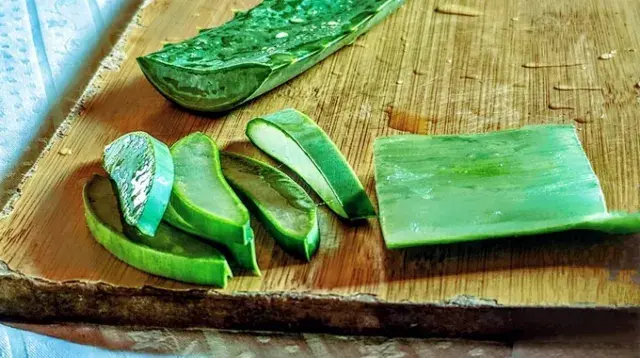
Fact file
- Scientific name: Aloe vera (syn. Aloe barbadensis)
- Family: Asphodelaceae
- Common names: Barbados aloes; Mazambron (Réunion); Lidah Buaya (“crocodile’s tongue” in Indonesia); Vahona (Madagascar), etc.
- Origin and distribution: native to the Arabian Peninsula (Hajar Mountains), now cultivated and naturalised in many hot, dry regions (Africa, Madagascar, the Mediterranean Basin, the Americas, Asia)
- Parts used: gel (inner leaf parenchyma); latex (yellow sap under the bark)
Aloe vera is a medium-sized, perennial, stemless succulent plant (basal rosette) whose fleshy leaves contain a gel rich in water and polysaccharides. The species is widely cultivated for traditional medicinal uses, as well as for ornamental purposes, and is used in many skincare products.
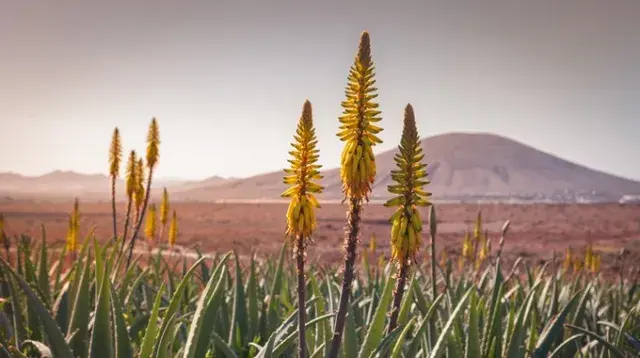
Botanical description
- Growth habit: dense rosette 60-80 cm high, with a very short stem; erect flowering stem when in season.
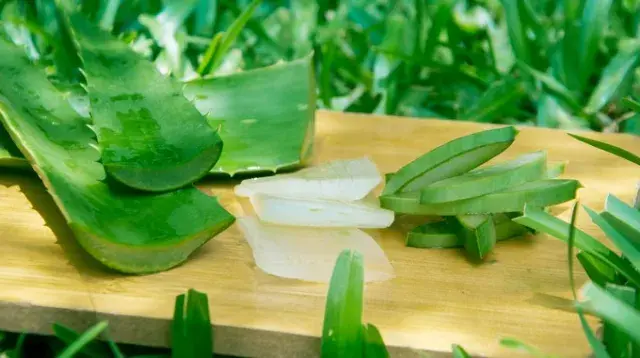
- Leaves: lanceolate, thick, green, sometimes with white spots on young plants, finely toothed edges; translucent gel at the centre.
- Inflorescences/flowers: clusters (racemes) of yellow to orange flowers borne on a sturdy stem.
- Internal organs: just below the epidermis of the leaves, a yellowish latex (juice); in the centre, the clear gel.
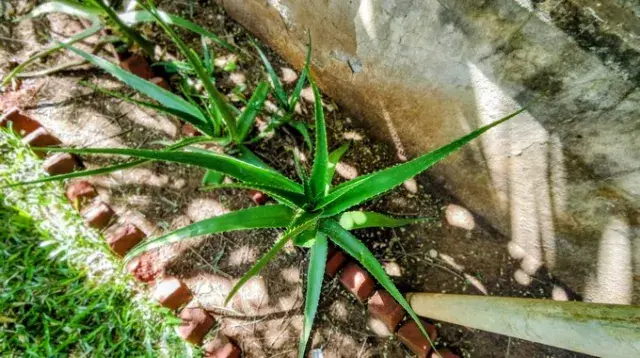
Ecology and habitat of aloe vera
A species of dry, sunny environments, aloe vera thrives in well-drained (sandy, stony) soils and tolerates drought well thanks to its water-filled leaves. It is grown on agricultural plots and in gardens in many tropical and subtropical areas.
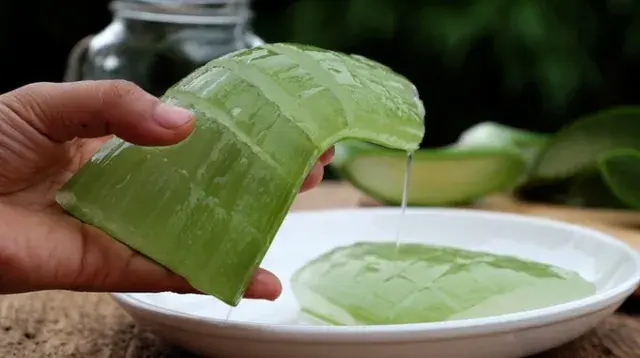
Traditional medicinal uses of aloe vera
- Skin care: in many regions, the gel is traditionally applied to soothe the skin (particularly after sunburn or minor burns), provide a feeling of hydration and promote skin comfort on a daily basis. In Madagascar, it is also used to treat ulcers and dermatitis.
- Hair & daily care: the gel is sometimes added to homemade preparations for hair and grooming, and more widely in cosmetic preparations.
- Other uses: some pharmacopoeias mention the sap/latex for short-term laxative uses and in the treatment of gastritis; others report uses for ear infections and earaches
Where is aloe vera found today?
Originally from the Hajar Mountains (Arabian Peninsula), aloe vera is widely cultivated and naturalised in arid and semi-arid areas around the world.
Find out more about our project in Madagascar to develop traditional medicine and cultivate medicinal plants.
FAQs
According to traditional uses, applying the gel of aloe vera is known to soothe and moisturise the skin (minor burns or sunburn, skin discomfort); some pharmacopoeias mention the latex for use as a short-term stimulant laxative. It is also used in some cultures to treat ear infections and other ear problems.
Aloe barbadensis is a botanical synonym for Aloe vera, so it is the same species.
A. arborescens is a shrubby plant (2–3 m) of the Aloe family, branched, with rosettes at the ends of the branches and large racemose inflorescences. It is found naturally in the mountainous regions of southern Africa and is widely cultivated throughout the world as an ornamental plant or for traditional uses similar to those of Aloe vera.
A distinction must be made between the gel and latex of aloe vera:
- The gel (the centre of the leaves) is the element most commonly used for external application and is generally considered to be safe.
- The latex (yellow sap under the bark) contains hydroxyanthracenes (aloin, aloe-emodin) which present a risk if ingested (oral preparations).
As a general rule, precautions should be taken to avoid self-medication, especially in pregnant/breastfeeding women, children or those undergoing treatment, and always seek the advice of a healthcare professional.
Yes: aloe vera has clusters of yellow to orange flowers on a stem.
Yes. For traditional uses, the gel of aloe vera can be added to homemade preparations to style hair or soothe the skin. Results and tolerance vary from person to person. And the cosmetics industry widely uses it for its moisturizing and soothing properties.
Modern classifications place Aloe in the Asphodelaceae family (and not the Liliaceae).
The use of medicinal plants may present risks. Traditional uses do not constitute a therapeutic promise. Before any personal use, seek advice from a healthcare professional.
To go even further
Browse our “Medicinal plants” page: illustrated fact sheets, videos and projects, from the Amazon to the Sahel.